
Some links are affiliate links. Each review says whether I used the tool myself. Full disclosure
In this article (10)
- Who This Review Is For
- TL;DR Box
- What Is Klarna?
- How Does Klarna Work?
- Should Side Earners Use Klarna for Business Purchases?
- How Does Klarna Compare to Afterpay, Affirm, and PayPal Pay Later?
- What Are the Risks of Late Fees and Overspending with Klarna?
- What Are Klarna’s Drawbacks?
- Is Klarna Worth It for Side Earners in 2026?
- Frequently Asked Questions
Why you can trust this review
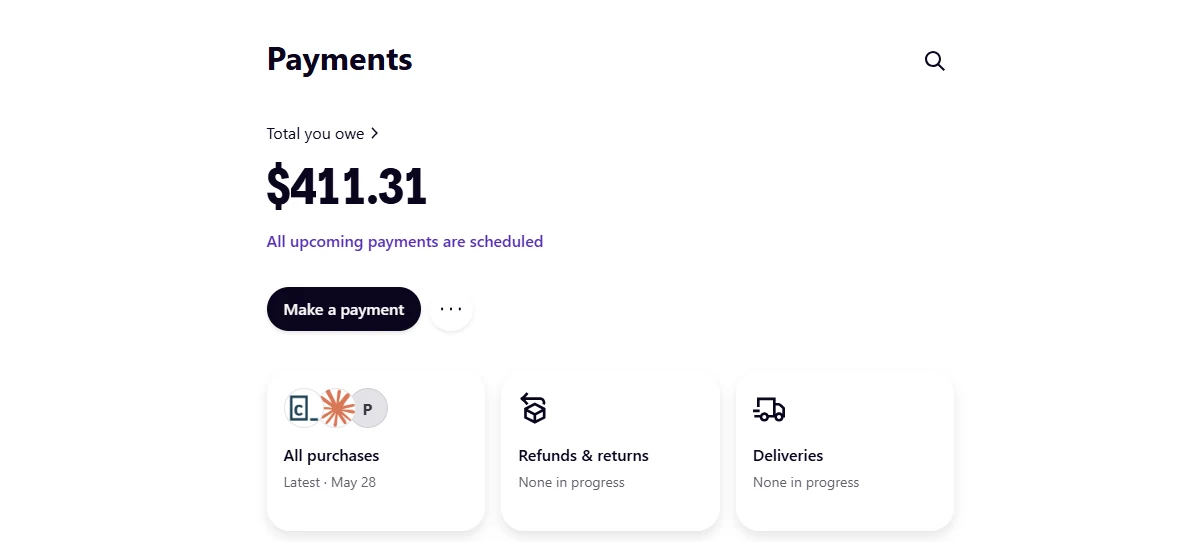
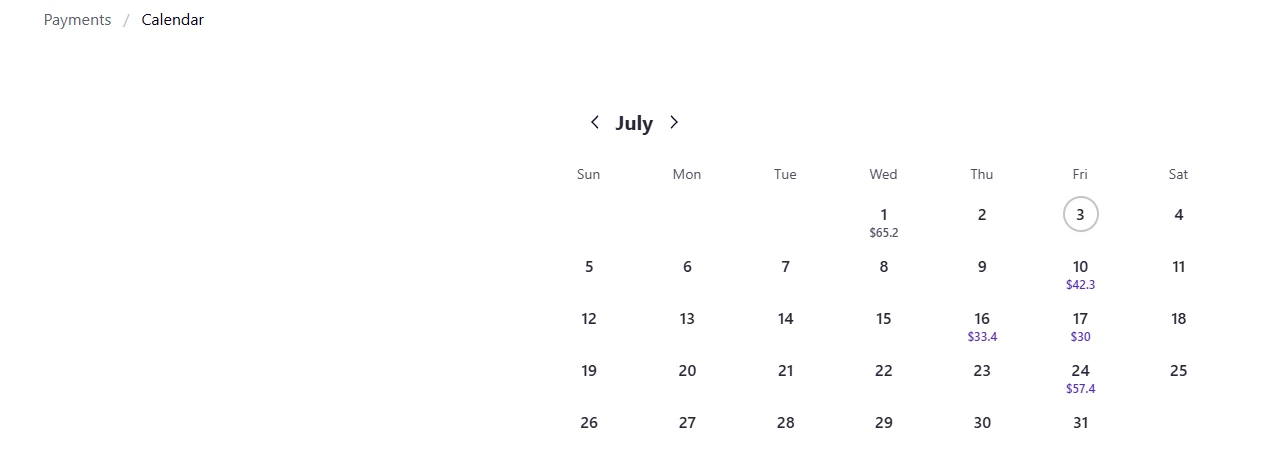
I actually use Klarna, and I am carrying a balance on it as I write this. Below is my real account: $411.31 owed, split across interest-free Pay-in-4 installments that land on set dates through the month (July 1, 10, 16, 17 and 24). I use it to spread the cost of business tools across pay periods, not as free money, and this review is written from that seat.
Who This Review Is For
If you are building a second income around a day job, the real question is not whether Klarna is convenient. It is whether splitting payments protects or eats into the extra money you are working for. This review looks at Klarna from that angle. Gone are the days when your only options at checkout were a debit card or a high interest credit card. Today, almost every major retailer offers a “Buy Now, Pay Later” option, promising to split your purchase into manageable, bite sized chunks. It sounds like a dream for anyone trying to manage their cash flow, especially when making larger purchases for a business or home.
At the absolute forefront of this financial revolution is Klarna. The Swedish fintech giant has become synonymous with the BNPL movement, with 118 million active customers as of Q1 2026 (eMarketer) and partnerships with roughly one million merchants worldwide. Their massive growth culminated in a highly anticipated $15 billion IPO valuation in 2025, cementing their status as a dominant force in global e-commerce.
But as the pink Klarna button becomes ubiquitous across the internet, financial experts and consumer advocates are raising alarms. The ease of splitting payments can make expensive items feel deceptively cheap, leading many shoppers into a cycle of debt they never intended to enter. This brings us to the core question we need to answer. Is buy now pay later a helpful financial tool or a trap that encourages overspending?
TL;DR Box
- Best for: Planned purchases and spreading costs without paying interest.
- Price: Free to use with optional late fees if you miss a payment.
- Features: Pay in 4, Pay in 30, and traditional monthly financing.
- Users: 118 million active customers and roughly one million merchant partners (Q1 2026).
- Risk: Generated $254 million in late fees in 2024 (9 percent of revenue), highlighting the danger of missed payments.
- Verdict: 6.8/10. Useful if disciplined, dangerous if not.
What Is Klarna?
Klarna is a global payment and shopping service founded in Stockholm, Sweden, in 2005. It provides consumers with flexible payment alternatives to traditional credit cards, primarily focusing on short term, interest free installment plans. The company integrates directly into the checkout process of online retailers, allowing shoppers to split their total cart value into smaller payments.
The platform has grown exponentially since its inception. Klarna has 118 million active customers and roughly one million merchant partners as of Q1 2026, making it the largest BNPL platform globally by both consumer base and transaction volume. This massive user base and merchant network drove the company to a staggering $15 billion valuation during its 2025 IPO. They currently offer three main payment options designed to cater to different financial needs and purchase sizes.
How Does Klarna Work?
The appeal of Klarna lies in its frictionless user experience. When you reach the checkout page of a partner merchant, you simply select Klarna as your payment method. The platform then presents you with a few different ways to handle the transaction.
The most popular option is “Pay in 4”. This splits your total purchase into four equal payments. The first payment is collected immediately at checkout, and the remaining three are automatically charged to your linked debit or credit card every two weeks. This option is completely interest free, provided you make all payments on time.
Alternatively, they offer “Pay in 30”, which allows you to receive your items first and pay the full balance within 30 days, also interest free. For much larger purchases, Klarna provides traditional monthly financing, which spreads the cost over several months but typically includes an APR ranging from 10 to 30 percent, depending on your creditworthiness.
The Pay in 4 process itself is straightforward: select Klarna at checkout, confirm the payment schedule, and the first payment is charged immediately. The remaining three payments are charged automatically every two weeks, so there is nothing to remember to log in and pay; the system handles the schedule for you.
Approval is usually instant. Klarna performs a soft credit check that does not impact your credit score to determine your eligibility and spending limit. However, if an automatic payment fails, you will be hit with late fees ranging from $7 to $35. The popularity of this system is undeniable. Klarna processed $105 billion in gross merchandise volume in 2024, up 14 percent from $92 billion in 2023 (Sacra).
Should Side Earners Use Klarna for Business Purchases?
While Klarna is heavily marketed toward fashion and lifestyle consumers, it has quietly become a highly effective tool for freelancers, creators, and small business owners who need to manage their cash flow. When you are running a lean operation, dropping a large sum of cash on equipment can severely restrict your operating budget for the month.
Consider a freelancer buying a camera lens for a content business. Splitting the cost into four Pay in 4 installments lets them acquire the equipment immediately to shoot a client project, while keeping most of the cash in their business checking account that month to cover software subscriptions and marketing expenses.
Klarna is best for purchasing equipment, tools, and software from major retailers. Their merchant network includes massive tech and electronics suppliers like Best Buy, Amazon, Shopify, and B&H Photo. The payment flexibility allows you to align your equipment costs with your incoming client payments.
However, using BNPL for business carries the same risks as personal use. If a client pays you late and your automatic Klarna payment fails, you will incur late fees that eat into your profit margins. Additionally, you must be meticulous with your bookkeeping to ensure you are properly tracking the split payments for tax purposes. Despite these hurdles, the strategy is gaining traction among small business owners and freelancers. Klarna does not publicly break out what share of its volume comes from business buyers, but merchants offering Klarna at checkout report a 23 percent increase in average order value compared to standard payment options (Sacra).
How Does Klarna Compare to Afterpay, Affirm, and PayPal Pay Later?
The BNPL space is highly competitive, with several major players vying for your checkout clicks. While they all offer similar core services, there are distinct differences in their merchant networks, fee structures, and target audiences.
| Feature | Klarna | Afterpay | Affirm | PayPal Pay Later |
|---|---|---|---|---|
| Pay in 4 | Yes | Yes | Yes | Yes |
| Pay in 30 | Yes | No | No | No |
| Monthly Financing | Yes (Up to 36 mo) | Yes (Up to 12 mo) | Yes (Up to 60 mo) | Yes (Up to 24 mo) |
| Merchants | 1 Million+ | 100,000+ | 250,000+ | Millions (Any PayPal) |
| Max Purchase | Varies by user | Varies by user | Up to $17,500 | $1,500 (Pay in 4) |
| Late Fees | $7 to $35 | Capped at 25% of order | No late fees | No late fees |
| Best For | Everyday shopping | Fashion and beauty | Large ticket items | Existing PayPal users |
Klarna stands out due to its massive merchant network and the unique Pay in 30 option, which is excellent for trying clothes before committing to the purchase. This dominance is reflected in the numbers. Klarna captures 35% of the BNPL market, making it the largest platform by transaction volume.
What Are the Risks of Late Fees and Overspending with Klarna?
The fundamental business model of BNPL platforms relies heavily on consumer psychology. By breaking a $200 purchase into four $50 payments, the item suddenly feels much more affordable. This psychological effect removes the natural friction of parting with a large sum of money, making it incredibly easy to justify purchases you would otherwise avoid.
This is where the danger lies. When you have multiple Pay in 4 plans running simultaneously across different retailers, it becomes very difficult to track your upcoming liabilities. If your checking account balance dips too low when an automatic payment triggers, you will be hit with a late fee. Klarna’s late fee is up to $7 per missed installment on Pay in 4 (capped at 25 percent of the order total or two fees per order), and up to $35 on monthly financing plans (Klarna).
These fees are not a minor part of their business. Klarna generated $254 million in late fees in 2024, accounting for 9 percent of total revenue (Sacra). This proves that a significant portion of their user base struggles to keep up with the payment schedules.
The overspending risk can quickly lead to a debt spiral. If you miss payments, Klarna may report the delinquency to credit bureaus, which will negatively impact your credit score. Furthermore, the constant merchant pressure and targeted marketing within the Klarna app are designed to keep you shopping.
What Are Klarna’s Drawbacks?
Before integrating Klarna into your regular shopping habits, you must be aware of its clear limitations and potential pitfalls. It is not a perfect system, and the consequences of misuse are severe.
- Late fees add up quickly: Missing a payment triggers immediate penalties that can negate any benefit of the interest free period.
- Not all merchants accept Klarna: While their network is massive, you cannot use it everywhere, limiting its utility as a universal payment method.
- Monthly financing charges interest: If you choose a longer term plan, you will likely pay APRs that rival traditional credit cards.
- Psychological effect encourages overspending: The platform is explicitly designed to make you spend more money than you normally would.
- Limited customer support: Resolving issues is primarily done through chat and email, which can be frustrating during urgent situations.
- No grace period: Payments are deducted automatically on the exact due date. There is no wiggle room if your paycheck is a day late.
- Automatic payments can cause overdrafts: If Klarna pulls a payment from an empty checking account, your bank will likely charge you an additional overdraft fee.
- Limited dispute resolution: Getting a refund for a returned item can sometimes be a slow and convoluted process between the merchant and Klarna.
The lack of flexibility regarding payment dates is a major pain point for consumers, especially when an automatic payment misses by a single day.
Ready to Manage Your Cash Flow?
If you have the discipline to track your payments, Klarna is an excellent tool for spreading out the cost of necessary purchases without paying interest.
Affiliate link. I may earn a commission at no extra cost to you.
Is Klarna Worth It for Side Earners in 2026?
Klarna earns a cautious 6.8/10 score. This rating reflects its undeniable value for planned, necessary purchases, heavily balanced against the severe risks it poses to consumers who lack strict financial discipline. It is a brilliantly executed product that solves a real cash flow problem, but it is also a psychological trap designed to increase your overall spending.
If you use a budget, track your expenses, and only use Klarna to spread the cost of items you already planned to buy with cash, it is a fantastic tool. If you use it to buy things you cannot afford today, it will eventually burn you.
Frequently Asked Questions
Does Klarna charge interest?
Klarna’s 4-payment plan is interest-free. Longer payment plans may charge interest. Late payments incur fees. Always check the terms before purchasing.
Does Klarna affect my credit score?
Klarna may perform a soft credit check (doesn’t affect score) or hard check (may lower score by 5-10 points). Paying on time improves your credit. Late payments hurt your credit.
What’s the maximum purchase limit on Klarna?
Klarna’s average order value is around $160 across all products, and roughly $80 to $100 on Pay in 4 specifically (Sacra). Spending limits vary by user and merchant. Klarna assesses each transaction individually, with limits typically increasing as you build payment history.
Can I use Klarna everywhere?
Klarna works with 300,000+ retailers online. Not all stores accept Klarna. Check if your favorite store is supported before using Klarna.
Is Klarna safe?
Yes. Klarna uses encryption and fraud protection. Your payment information is secure. However, BNPL can encourage overspending. Use responsibly.
Free: the Keep-or-Cancel Deck
Klarna in my deck: KEEP, with rules (6.8/10)
This review has its own verdict card in "Keep, Cancel, or Downgrade": 13 tools I actually ran, with real costs in money and hours, honest verdicts, and cheaper swaps. See how Klarna scored against the other 12.
Its card shows the $411.31 I owe right now. The honest side of BNPL.
One email with the PDF, then the weekly notes. Real numbers, no income promises. Unsubscribe anytime.
Sources & Further Reading
- CFPB: Consumer Tools. Federal regulator resources for credit, loans, and consumer rights.
- FTC: FTC Consumer Resources. Federal guidance on consumer protection and fraud avoidance.
- U.S. Federal Reserve: Economic Well-Being of US Households 2024. Annual survey of household financial conditions.
- NerdWallet: NerdWallet Research. Independent personal-finance comparison and reviews.
- Bankrate: Bankrate Research. Personal-finance survey and rate data.
Share this article
WrayWest
By Dwayne Lindsay · Building sustainable creator businesses without the noise.
Start Here · Framework · Articles · Tools · About · Contact
© 2026 WrayWest. All rights reserved.

Full-time chef building a creator business alongside my day job. I work the 6:30 AM to 3:00 PM shift and write about what actually works around it.
Writes about: creator business · side income · solo founder tools · email marketing · personal finance for creators
Credentials: Tool research distilled into the WrayWest framework. Writing publicly about creator business since August 2025. All claims anchored to primary sources (IRS, BLS, SEC, CFPB, Federal Reserve, Kajabi, Influencer Marketing Hub, etc.).